

The Paraphraser.io AI humanizer is a web tool that rewrites text from chatbots such as ChatGPT, Gemini and Claude so it reads more like human writing. People also search for it as “humanizer ai io”. We read its tool page, the pricing page, the privacy policy and the terms on November 21, 2026. We did not create an account, pay for a plan or run text through the tool, so this review covers what the company states, not the quality of its output. GeminiGenais is independent and not affiliated with Paraphraser.io.
What is the Paraphraser.io AI humanizer?
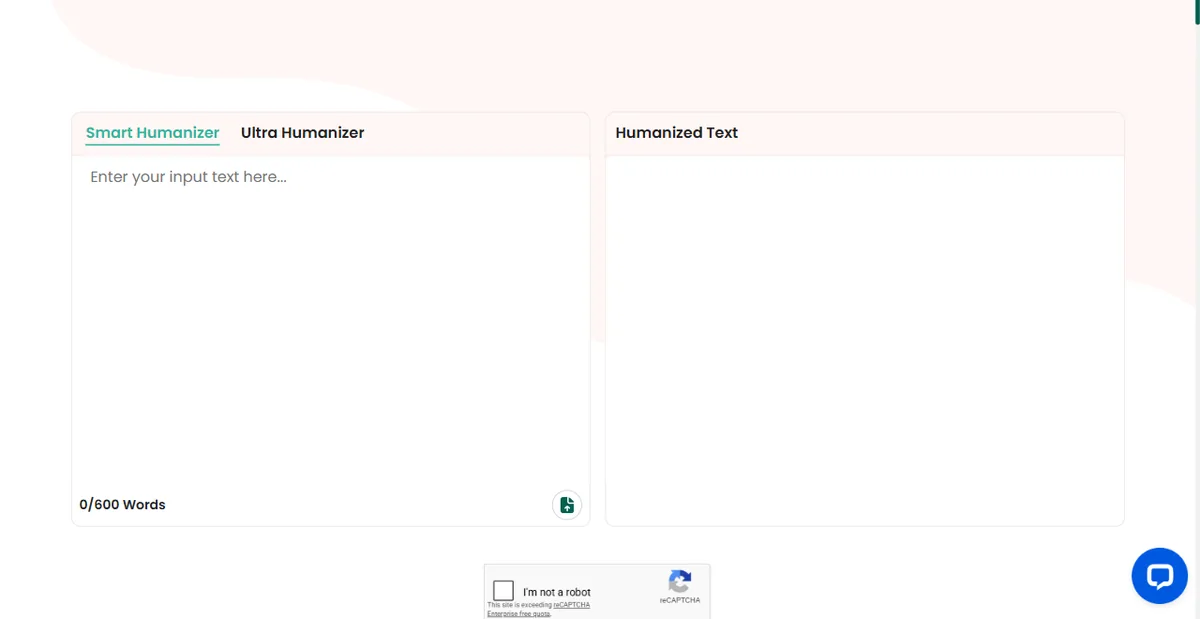
The tool page is headed “Humanize AI Text Tool”. You paste text or upload a file, click a “Humanize AI Text” button, and the result appears in a “Humanized Text” panel. Two modes are listed: Smart Humanizer, which the page says is free, and Ultra Humanizer, marked as a Pro feature for “enhanced readability.” The language menu lists English, Portuguese, Indonesian, Spanish, French and Italian.
The page FAQ says registration is not required and that you can humanize text in “as many articles as you desire.” It also lists academic work among its uses.
How much does it cost, and what are the word limits?
When we loaded the Paraphraser.io humanizer page on November 21, 2026, it showed a “Humanizer Weekly Plan” at $3.99 for one week with a word limit of 1,500. The same page advertises “Unlimited Usage” and did not state any word limit for free use. We could not confirm whether the 1,500 figure applies per request or per week.
The Paraphraser.io pricing page lists seven paid plans and no free tier: from Lite at $9 a week to a yearly Standard plan at $999, with Silver at $23 and Gold at $40 a month. Words per request run from 1,500 to 10,000. The table never names the humanizer, so it is unclear which plans include Ultra Humanizer.
The pricing page did not state auto-renewal terms, so read the refund policy before paying.

What we found
- On November 21, 2026, the tool page said “No registration or sign-up required,” while also offering sign-up and a guest checkout.
- The same day, the page listed a Humanizer Weekly Plan at $3.99 for one week with a 1,500-word limit, next to an “Unlimited Usage” claim.
- On November 21, 2026, the pricing page listed seven paid plans from $9 a week to $999 a year, none naming the humanizer.
- The tool page claims the output “can effectively bypass AI detection systems like Turnitin, GPTZero, and Originality.ai.” It showed no test results on November 21, 2026, and we did not test this.
- The tool page says it does not store or share uploaded text, but the privacy policy we read on November 21, 2026 has no section on pasted text.
What happens to the text you paste?
The tool page states: “We maintain strict confidentiality and do not store or share your uploaded text with anyone.” The Paraphraser.io privacy policy is less specific. It does not say how long pasted text is kept or whether it is used to train models. Its only training statement covers Google Workspace API data.
The Paraphraser.io terms do not mention tool inputs, outputs or AI detection,. Until the policy addresses pasted text directly, keep unpublished work, client documents and anything with personal details out of the box.
Why humanizing text to pass AI detectors is risky for students
Cornell’s Center for Teaching Innovation describes humanizers as software that edits AI text to avoid detection by mimicking human writing, and says they make AI-written work less likely to be flagged. The same page warns that detection tools on their own “do not provide a workable solution” and that students may be wrongly accused, a risk that falls harder on students learning English as an additional language. It points instructors to verifiable evidence instead, such as fabricated citations or a student who cannot explain their work.
The Santa Fe Community College faculty guide advises instructors to “explicitly ban humanizers” in syllabi and define consequences, to ask for drafts, outlines and AI prompts, and to check version history in tools like Google Docs. It also notes that humanized text “often remains superficial.” Check your course policy before running any graded work through a rewriting tool.
If you want to know why your own writing might read as machine-made, paste it into our free AI text checker to spot stock phrases yourself, then rewrite those lines in your own words.
Who should try it, and who should skip it?
Worth a look if you want a quick, no-account rewrite of a casual email or blog draft that you will edit yourself before using. Skip it if you need a clear written answer on what happens to pasted text, or if you plan to hand in the output as your own coursework. You can find more AI tool reviews on our reviews page.
Frequently asked questions
Is the Paraphraser.io AI humanizer free?
The tool page says Smart Humanizer is free and needs no registration. Ultra Humanizer is listed as a Pro feature, and on November 21, 2026 the page showed a $3.99 weekly humanizer plan with a 1,500-word limit.
Does Paraphraser.io get past Turnitin or GPTZero?
The page claims it can bypass Turnitin, GPTZero and Originality.ai, but it shows no test results and we did not test it.
Do I need an account to use it?
The page FAQ says registration is not required.
Does Paraphraser.io keep the text I paste?
The tool page says it does not store or share uploaded text. The privacy policy does not cover pasted text or retention, so we could not confirm this.
Which languages does the humanizer support?
The page lists English, Portuguese, Indonesian, Spanish, French and Italian.